The home hyperbaric chamber market has a pricing problem that is common to early-stage consumer hardware categories: the range from entry-level to premium is wide enough to suggest completely different products, the specification differences that justify price differentials are not always clearly communicated, and the marketing at every price tier implies that each unit represents the optimal choice for its intended buyer. If you search for home hyperbaric chambers, you will find units priced from under three thousand dollars to over twenty-five thousand, and the information available to help you understand what you are actually buying at each price point is not proportional to the significance of the investment.
This is the buying situation that rewards the buyer who does the specification diligence before the purchase decision rather than relying on manufacturer marketing to frame the value proposition. The price differentials across the consumer market are real, and they correlate with meaningful specification differences. Understanding what those differences are, and whether they are relevant to the specific use case you are optimising for, is the analysis that produces a defensible investment decision rather than an emotionally driven one.
The Entry-Level Tier: $2,500 to $5,000
The entry tier of the home hyperbaric market is dominated by soft-shell inflatable chambers from manufacturers including Newtowne Hyperbarics and OxyRevo at the lower price points. The units in this range typically achieve 1.3 to 1.5 ATA maximum pressure, use flexible nylon shell construction that allows deflation and storage when not in use, and often include a basic oxygen concentrator in the package price. The interior dimensions are smaller than mid-range and premium units, typically sized for a single adult in a reclining position with limited movement.
What you are getting at this price point is a functioning hyperbaric environment capable of producing the physiological effects documented in mild hyperbaric research at 1.3 to 1.5 ATA. For buyers whose use case is wellness-focused rather than performance-optimised, the entry tier units deliver meaningful oxygen enrichment at pressures that the research supports for general health and relaxation applications. The Peak Primal HBOT therapy review of units at this price tier provides the specification detail needed to evaluate which entry-level options represent genuine value versus which are simply the cheapest point of entry into the category.
The limitations of the entry tier are primarily the pressure ceiling and the interior comfort. Buyers who want to target the 2.0 ATA pressure range documented in the performance recovery research will need to move up the price tiers. Buyers who intend to use the chamber daily for extended sessions will find the interior dimensions of entry-level units restrictive over time. And buyers who prioritise long-term reliability should understand that soft-shell materials have service lives that hard-shell units at higher price points extend considerably.
The Mid-Range Tier: $5,000 to $12,000
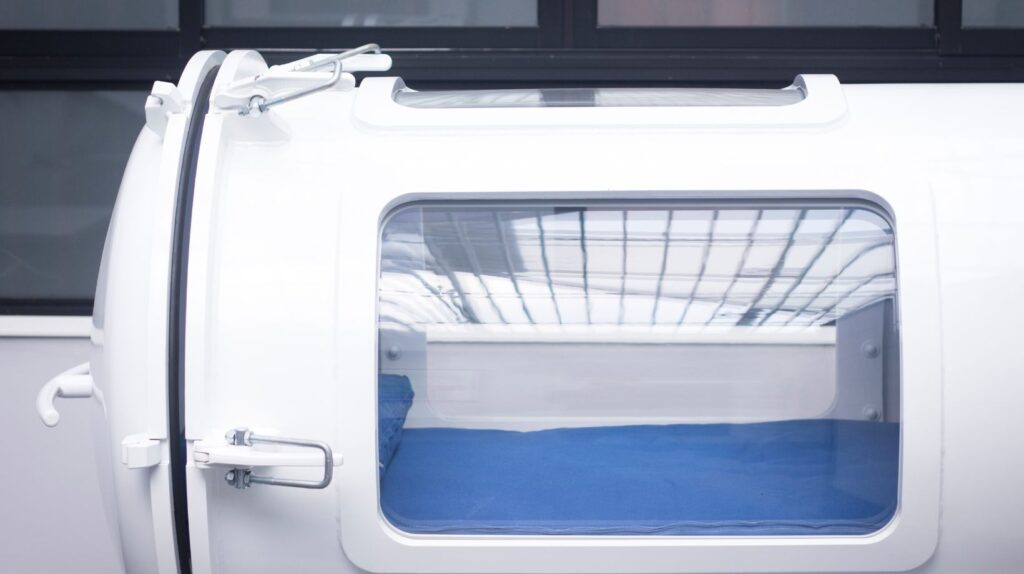
The mid-range tier is where the consumer HBOT market’s most considered purchases are clustered, and where the specification improvements from the entry tier begin to translate into meaningfully different protocol capabilities. Units in this range include upgraded soft-shell chambers with higher pressure ceilings in the 1.5 to 2.0 ATA range, entry-level hard-shell chambers with acrylic construction, and some premium soft-shell designs with improved interior dimensions and higher-grade oxygen delivery systems.
The key specification improvements at mid-range pricing are the achievable pressure ceiling and the quality of the oxygen delivery system. A mid-range hard-shell unit at 1.5 ATA with a quality concentrator delivers more reliable session parameters than an entry-level soft unit rated at the same maximum pressure, because the rigid shell maintains pressure stability across the session duration rather than the gradual pressure reduction that soft materials under sustained load can produce. The interior dimensions at mid-range pricing also allow more comfortable extended sessions, which affects the practical session duration achievable and therefore the total oxygen dose per session.
For the performance-focused buyer whose use case is post-exercise recovery and general health optimisation at 1.5 ATA, the mid-range tier offers the best combination of meaningful specification capability and manageable investment. The return on investment calculation at this tier, comparing the annual cost of ownership against the cost of professional hyperbaric access at similar session frequency, typically produces a breakeven within two to four years of consistent use.
The Premium Tier: $12,000 to $25,000 and Above
Premium hyperbaric chamber hardware is primarily hard-shell construction from manufacturers including Summit to Sea and the clinical equipment manufacturers who produce consumer-grade versions of their professional product lines. The specification advantages at the premium tier are the higher pressure ceiling, typically 2.0 ATA or above, the larger and more comfortable interior dimensions, the premium oxygen delivery system specifications, and the build quality and reliability that a higher price point supports.
For the buyer targeting the research-documented protocols at 2.0 ATA, the premium tier is where the hardware capability to reliably deliver those sessions consistently exists. The clinical research on performance recovery at 2.0 ATA produces meaningfully larger effect sizes than research at 1.3 to 1.5 ATA across most outcome measures, and the buyer whose use case is performance optimisation rather than wellness maintenance may find that the additional investment in premium-tier hardware is justified by the protocol capability difference.
The premium tier also includes the most feature-complete oxygen delivery systems, with higher flow rate concentrators that maintain target oxygen concentrations more reliably across long sessions in larger chamber volumes. The system-level quality of a premium unit, where the chamber and concentrator specifications are matched to work together optimally rather than assembled from whatever components are available at the price point, is one of the less visible but more consequential differences between premium and mid-range hardware.
The Real Cost Calculation
The purchase price is the starting point for the true cost calculation, not the ending point. Ongoing costs include the electrical consumption of the compressor and concentrator, which varies significantly by unit design and session frequency. Filter replacement and consumable costs for the oxygen concentrator, which has scheduled maintenance requirements that affect its output specification over time. Chamber seal and fitting maintenance costs that vary by construction type. And the opportunity cost of the space dedicated to a permanent installation.
Set against these costs is the avoided cost of professional HBOT access, which at commercial wellness facilities and sports performance centres ranges from one hundred to three hundred dollars per session in most markets. For a user running four sessions per week, the annual professional access cost at mid-range pricing would be between twenty and sixty thousand dollars. Against this alternative, a home unit at any price tier produces a favourable ROI within a year or two of consistent use at the equivalent session frequency.
The detailed analysis of how much does a hyperbaric chamber cost across the full range of consumer options, including the ongoing cost components that purchase price alone does not reveal, is the most complete resource available for making the investment decision from a total cost perspective rather than from purchase price alone. For the technology buyer who treats every significant hardware investment as a multi-year ROI calculation rather than a single transaction, this is the analysis that produces the most defensible decision at whatever tier the use case and budget justify.